Why K-Pop Fans Collect Photocards: The Economics of Fandom
If you've ever watched a K-Pop fan carefully slice open an album package, flip past the CD without a second glance, and immediately start rifling through tiny cards the size of a credit card, you've witnessed the heart of modern K-Pop fandom. Photocards have become the single most coveted item in any album purchase, and the culture around collecting, trading, and displaying them has grown into a full-blown economy worth millions of dollars.
What Exactly Are Photocards?
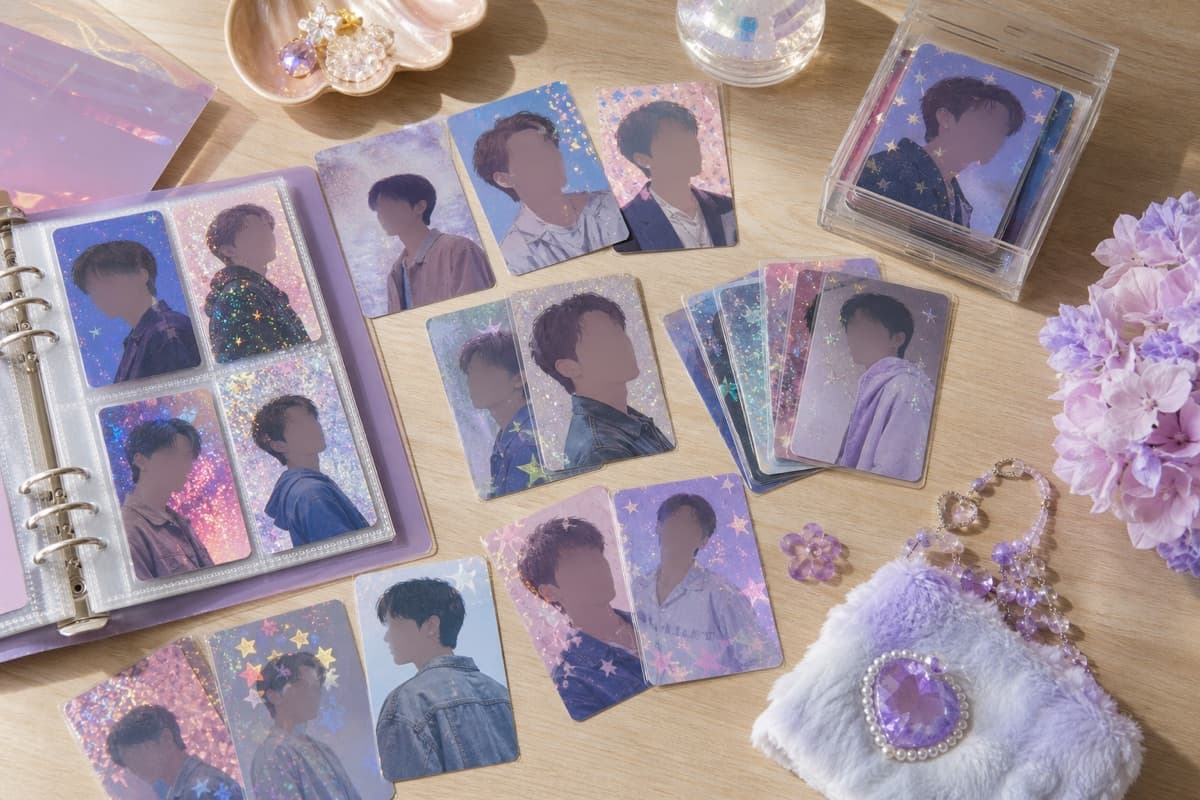
Photocards (포토카드, often shortened to "PCs") are small collectible cards, roughly 55mm x 85mm, that come randomly inserted inside K-Pop albums. Each card features a photo of one group member in a specific concept or outfit tied to that album's era. Think of them as baseball cards for the K-Pop generation, except the stakes feel much higher to the people involved.
A single album might include one to three random photocards from a set of 30 or more possible designs. You don't get to choose which ones you receive. This randomness is the entire engine driving the photocard economy.
Types of Inclusions
Photocards are the main attraction, but albums typically include a range of collectible items:
- Photocards - The standard small cards, usually 1-3 per album
- Postcards - Larger format photos, sometimes double-sided
- Folded posters - Included inside the album package
- Stickers - Sheet of member-specific or group stickers
- Booklets/Photobooks - 80-200 page books with concept photos
- Lenticular cards - Holographic or motion-effect cards (rarer, higher value)
- Lucky draws - Extremely rare cards included in select copies, often worth hundreds of dollars
Why Fans Buy Multiple Copies
Here's where outsiders usually get confused. Why would someone buy 10, 20, or even 50 copies of the same album?
The answer is simple: random distribution. If your favorite member has 4 different photocard versions in an album, and each album contains only 1 random card, you need to buy multiple copies just to have a chance at getting the ones you want. Multiply that by fans who collect all versions for all members, and the numbers climb fast.
Entertainment companies understand this perfectly. SM Entertainment, JYP Entertainment, HYBE, and other major labels have refined the random inclusion system into a finely tuned sales mechanism. More versions of an album (some releases have 6-8 different cover versions, each with unique photocard sets) mean more reasons to buy.
The math: A group with 7 members, 4 photocard versions per member, across 4 album versions equals 112 unique photocards for a single comeback. No fan is pulling all 112 from random purchases alone.
This system directly contributes to the record-breaking album sales numbers you see in K-Pop. When Stray Kids or SEVENTEEN sell millions of copies in a week, a significant portion of those sales come from fans buying multiples for photocards.
The Trading Culture
Since random distribution makes it nearly impossible to complete a collection through purchases alone, trading has become the backbone of the photocard community.
Online Trading
Platforms like Twitter/X, Instagram, and specialized apps like Pocamarket and Dear My Muse serve as active trading hubs. Fans post "WTT" (Want To Trade) and "WTS" (Want To Sell) listings with photos of their available cards and wishlists of what they're seeking.
A typical trade post looks something like: "WTT: Jungkook Butter PC ver. 3 / LF: Taehyung Butter PC ver. 1." The shorthand and rapid-fire communication style can feel impenetrable to newcomers, but the community runs remarkably smoothly given the volume of transactions.
Offline Trading Events
In Korea and increasingly worldwide, fans organize photocard trading events (포카 교환회). These in-person meetups happen at cafes, convention centers, or fan-organized spaces where hundreds of collectors spread their cards on tables and negotiate trades face to face. The energy at these events is intense; fans arrive with binders full of duplicates, wishlists printed out, and a strategy for the day.
Major cities like Seoul, Tokyo, Bangkok, and Jakarta host regular trading events, sometimes drawing thousands of participants. The scene has become organized enough that some events charge entry fees and hire security.
The Photocard Economy
What started as a simple collectible has evolved into a legitimate secondary market. Pricing depends on member popularity, card rarity, and demand:
- Common album photocards: $3-15
- Limited event photocards: $20-80
- Fansign/Lucky draw cards: $50-300
- Extremely rare or discontinued cards: $300-500+
- One-of-a-kind signed polaroids: $1,000+
A rare photocard of a top-tier group's most popular member can easily sell for $200+, while less popular members from the same group might go for $10-20. This price gap sometimes causes tension within fandoms.
POBs: Pre-Order Benefits
Pre-order benefits (POBs) are special photocards or inclusions that you only receive by pre-ordering from specific retailers. Different stores offer different POBs, meaning a fan who wants every version needs to order from multiple retailers. A single album might have 5-10 different store-exclusive POBs across retailers like Weverse Shop, Ktown4u, Soundwave, and others.
This retailer-exclusive system has been criticized for being exploitative, but it also drives pre-order numbers that help albums chart higher in the first week of release.
Binder Culture: How Fans Display Collections
Walk into any K-Pop fan's room, and you'll likely spot binders filled with carefully organized photocards in clear plastic sleeves. Binder collecting has become an art form and a hobby within a hobby.
Fans organize their binders by:
- Group and era (one section per album comeback)
- Member (all cards of one person together)
- Rarity (common cards separated from rare pulls)
- Aesthetic (some fans arrange by color or concept for visual appeal)
The binders themselves have become collectible items. Custom-designed binder covers featuring fan art, embossed logos, or member photos sell well on platforms like Etsy. Decorating your binder with stickers, tabs, and dividers is part of the experience.
Fans frequently post "binder tours" on YouTube and TikTok, walking viewers through their collections card by card. Popular binder tour videos regularly hit hundreds of thousands of views.
The Environmental Debate
The elephant in the room: what happens to all those extra albums?
When fans buy 20 copies of an album for photocards, they typically keep one copy and need to dispose of the rest. This has led to a visible waste problem. Photos of dumpsters overflowing with unopened or stripped K-Pop albums have circulated on social media, sparking real debate about the environmental cost of photocard culture.
Some responses to this issue include:
- Album-less photocard packs: Some companies now sell photocard packs separately from albums, though these don't count toward chart sales
- Donation drives: Fan groups organize album donations to schools, libraries, and charities
- Resale at reduced prices: Stripped albums (without photocards) sell for $2-5 on secondhand markets
- Fan pressure: Increasingly vocal fans have pushed companies to reduce packaging waste and offer more sustainable alternatives
The environmental conversation is ongoing, and companies have been slow to make structural changes because the current system is enormously profitable.
Digital Photocards
As the industry evolves, digital photocards have entered the scene. Platforms like Weverse and Phoning offer digital-exclusive photocards that fans can collect within apps. Some use blockchain technology, though the industry has largely moved away from NFT branding after the broader crypto backlash.
The reception has been mixed. Digital cards solve the waste problem, but many collectors insist that the physical, tangible nature of photocards is what makes them special. For now, physical photocards remain dominant, and digital versions exist as a supplement rather than a replacement.
How This Drives the Industry
The photocard system isn't just a quirky fan hobby. It's a fundamental part of how K-Pop generates revenue. When industry publications report that an album sold 5 million copies, a significant chunk comes from fans purchasing multiples for photocards.
Entertainment companies have built their business models around this reality. Photocard design, variety, and distribution strategy are now part of album planning from the earliest stages. Dedicated teams work on card concepts, photographers shoot photocard-only sessions, and marketing departments plan retailer-exclusive POB deals months in advance.
What started as a small bonus item tucked inside a CD case has become the centerpiece of K-Pop's physical media strategy and one of the most fascinating collector economies in modern pop culture.
Think you know your K-Pop members well enough to recognize them on sight? Test yourself with our K-Pop member guessing games and see how deep your fandom knowledge really goes.