Don't Pour Your Own Drink: Korean Table Manners Guide
Sitting down at a Korean restaurant for the first time can be a minefield of unwritten rules. You might reach for your rice bowl, grab your chopsticks the wrong way, or pour your own glass of soju without realizing you've just committed three etiquette violations in under ten seconds. Korean table manners are deeply rooted in Confucian values of respect, hierarchy, and community, and while Koreans won't expect perfection from a foreign guest, knowing the basics will earn you genuine respect and a much warmer dining experience.
Wait for the Eldest to Start Eating
This is the golden rule of Korean dining, and it applies to almost every meal shared with others. The oldest person at the table takes the first bite, and everyone else follows. If you're eating with a Korean family or colleagues, watch for the eldest to pick up their spoon before you touch yours.
At a work dinner, the boss eats first. At a family gathering, the grandparents eat first. Even among friends of similar age, the oldest person typically gets this honor, although close friends often relax it.
Tip: If the eldest person says "먼저 드세요" (please eat first), that's your green light. Refusing their invitation would actually be impolite.
The Spoon and Chopstick System
Unlike Chinese or Japanese dining, where chopsticks handle most of the work, Korean meals use both a spoon and chopsticks with distinct roles.
Spoon Rules
- Use your spoon for rice and soup. This is non-negotiable in traditional etiquette. Eating rice with chopsticks is considered a Japanese or Chinese practice, and older Koreans may notice.
- Your spoon is also the correct utensil for jjigae (stew) and anything liquid-based.
- Rest your spoon on the rice bowl or the table when not in use, never on a side dish plate.
Chopstick Rules
- Chopsticks are for side dishes only: kimchi, vegetables, meat, fish, and everything else that isn't rice or soup.
- Don't use your spoon and chopsticks at the same time. Pick one up, use it, set it down, then pick up the other. Holding both simultaneously looks rushed and inelegant.
- Never stick chopsticks upright in rice. This resembles incense sticks placed in rice as an offering to the dead at funerals. It's one of the most well-known taboos across East Asian cultures, and older Koreans take it seriously.
Korean Chopsticks Are Different
If you've used chopsticks in China or Japan, Korean chopsticks will feel unfamiliar. They're flat and made of stainless steel, not round and wooden. The flat shape and metal material make them slippery at first, but Koreans appreciate the effort even if you struggle. The metal tradition has practical roots: steel is more hygienic and lasts longer than wood. Some historians trace it back to Korean royalty using silver utensils to detect poison.
Don't Lift Your Rice Bowl
This surprises visitors from other Asian countries. In Japan and China, lifting your rice bowl is normal. In Korea, your bowls stay on the table. You lean toward the table and bring your spoon down to the bowl. The same applies to soup bowls.
Pouring Drinks: The Two-Hand Rule
Korean drinking etiquette deserves its own article, but the table manner basics are essential for any shared meal.
Pour for Others, Not Yourself
Pouring your own drink is one of the most noticeable faux pas at a Korean table. You should always pour for others, and they will pour for you. If your glass is empty, someone will eventually notice and fill it. If they don't, hold your glass toward someone else at the table, and they'll get the hint.
Use Two Hands
When pouring a drink for someone older or higher-ranking, use both hands on the bottle. When receiving a drink from someone older, hold your glass with both hands as well. Among close friends of the same age, one hand is fine, but when in doubt, two hands is always the safe choice.
Turn Away When Drinking with Elders
When drinking alcohol with someone older or in a position of authority, turn your body slightly to the side so you're not drinking while directly facing them. This small gesture shows respect. You might also use your free hand to cover the glass slightly. This tradition is fading among younger Koreans in casual settings, but at work dinners and family gatherings, it's still widely practiced.
Communal Dining Culture
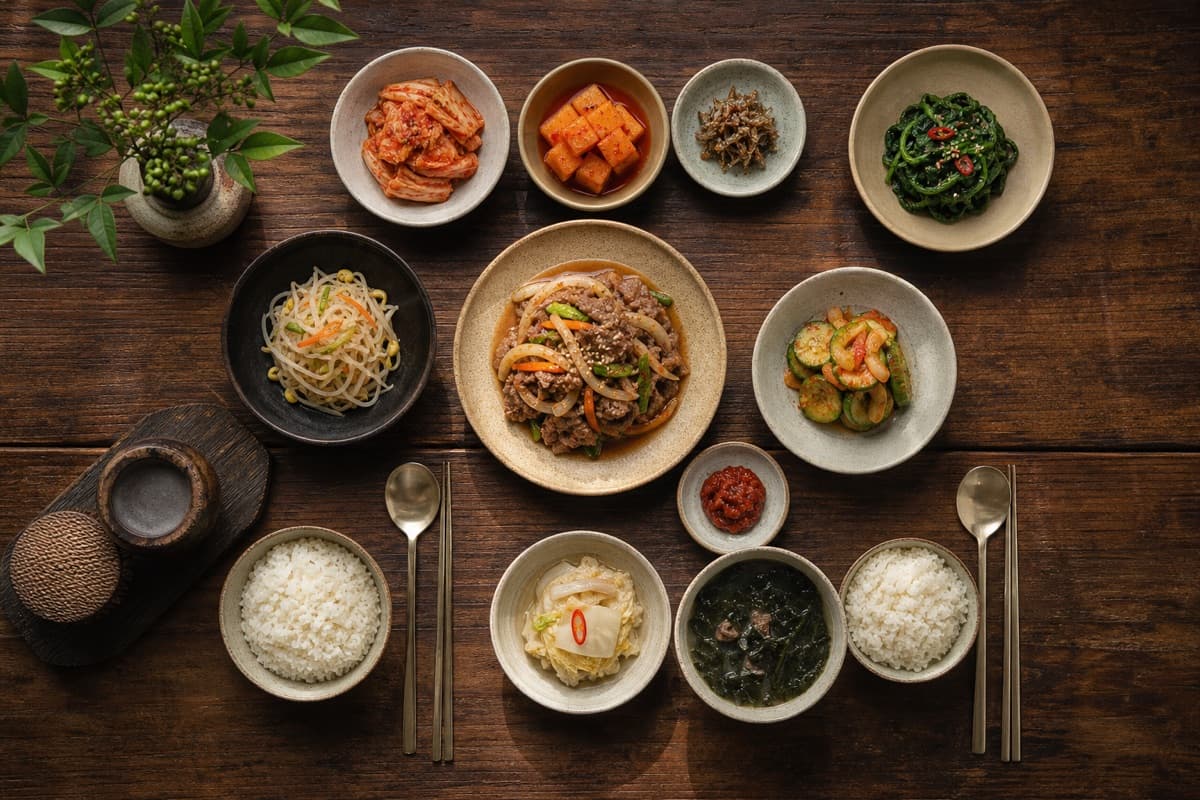
Korean meals are designed for sharing. The typical setup features a personal bowl of rice and a bowl of soup for each person, with several shared side dishes in the center of the table.
Sharing from Common Plates
Everyone eats from the same side dish plates. There's no serving spoon system like in some Western restaurants. You pick up kimchi or seasoned spinach directly from the communal plate with your chopsticks and eat it. This communal style might feel uncomfortable at first, but it's a fundamental part of Korean food culture that emphasizes togetherness.
The Jjigae Situation
Here's where it gets interesting for newcomers: jjigae (stew) is often shared from the same pot. Everyone dips their spoon into the bubbling hot pot in the center of the table. While some restaurants now offer individual portions, the traditional style is communal. If this feels too intimate, ordering a personal-sized jjigae is perfectly acceptable, and nobody will judge you.
Post-pandemic, many Koreans have started using serving spoons more frequently, but communal eating remains the norm.
Essential Meal Phrases
Two phrases will cover 90% of your dining communication needs:
- Before eating: 잘 먹겠습니다 (Jal meokgesseumnida) — "I will eat well." Said before the meal, similar to the Japanese "itadakimasu." Expresses gratitude to whoever prepared or is paying for the meal. Say it with a slight head bow, and Koreans will immediately warm up to you.
- After eating: 잘 먹었습니다 (Jal meogeosseumnida) — "I ate well." Thanks the host, cook, or whoever treated you. A simple gesture that carries real weight.
Pronunciation tip: "jal" sounds like "jahl," and "meok" rhymes with "muck." Don't stress about perfection. The attempt alone is meaningful.
Restaurant Customs That Surprise Foreigners
Korean restaurants operate differently from what most visitors expect.
The Call Button
Most Korean restaurants have a call button on each table. Press it when you need anything. In restaurants without one, calling out "여기요!" (yogiyo, "over here!") is perfectly acceptable and not considered rude.
Water Is Free (and Self-Serve)
Water is always complimentary. Many places have a water dispenser where you help yourself. If you see one by the entrance, go ahead and grab a cup.
Side Dishes Are Free Refills
Those small side dishes (반찬) that come with your meal are free and refillable. Run out of kimchi? Just ask for more. There's no extra charge, and requesting refills is completely normal.
Don't Tip
Tipping is not part of Korean culture. Not at restaurants, not for delivery, not at hair salons. Leaving money on the table can actually cause confusion, as the staff might chase you down thinking you forgot your change. Service is included in the price, and workers receive a salary rather than depending on tips.
Splitting the Bill
Koreans typically don't split bills item by item. The most common approach is one person pays for everything, usually the oldest person or the boss at a work dinner. Among friends, they take turns treating each other across different outings. If you must split, ask the cashier to divide evenly. Itemized splitting is considered awkward.
A Few More Things to Keep in Mind
- Don't blow your nose at the table. Excuse yourself and go to the restroom. Sniffling is more acceptable than nose-blowing during a meal.
- Eat at a similar pace as others at the table. Finishing way too early or too slowly stands out and can make others uncomfortable.
- Don't leave excessive food on your plate. While you don't need to clean every grain of rice, wasting food is frowned upon. Order what you can finish.
- Shoes off if you're sitting on the floor. Many traditional Korean restaurants have low tables where you sit on cushions. Remove your shoes before stepping onto the raised floor area.
Korean table manners might seem overwhelming at first, but most of these rules boil down to two principles: respect your elders and eat together as a community. Get those right, and everything else falls into place. And if you make a mistake? Most Koreans will just smile, appreciate your effort, and probably refill your soju glass for you.