Soju, Maekju, and the Art of Korean Drinking Culture
If you've spent any time around Korean culture, whether through K-dramas, travel, or Korean friends, you've probably noticed that drinking plays a significant role in social life. Korea's relationship with alcohol is deeply woven into how people bond, celebrate, grieve, and even do business.
But Korean drinking culture isn't just about consuming alcohol. It's a complex social ritual with unspoken rules, beloved traditions, and a drinking etiquette system that reflects the broader values of respect, hierarchy, and community. Let's break it all down.
Soju: Korea's National Spirit
No conversation about Korean drinking can start anywhere else. Soju (소주) is the best-selling spirit in the world by volume, and Korea is where nearly all of it is consumed.
What Exactly Is Soju?
Modern soju is a clear, slightly sweet distilled spirit typically sitting between 16% and 20% alcohol by volume. Traditional soju was distilled from rice, but most commercial soju today is made from diluted ethanol with added sweeteners and flavorings. It's affordable, smooth, and dangerously easy to drink.
The Big Brands
Two brands dominate the market:
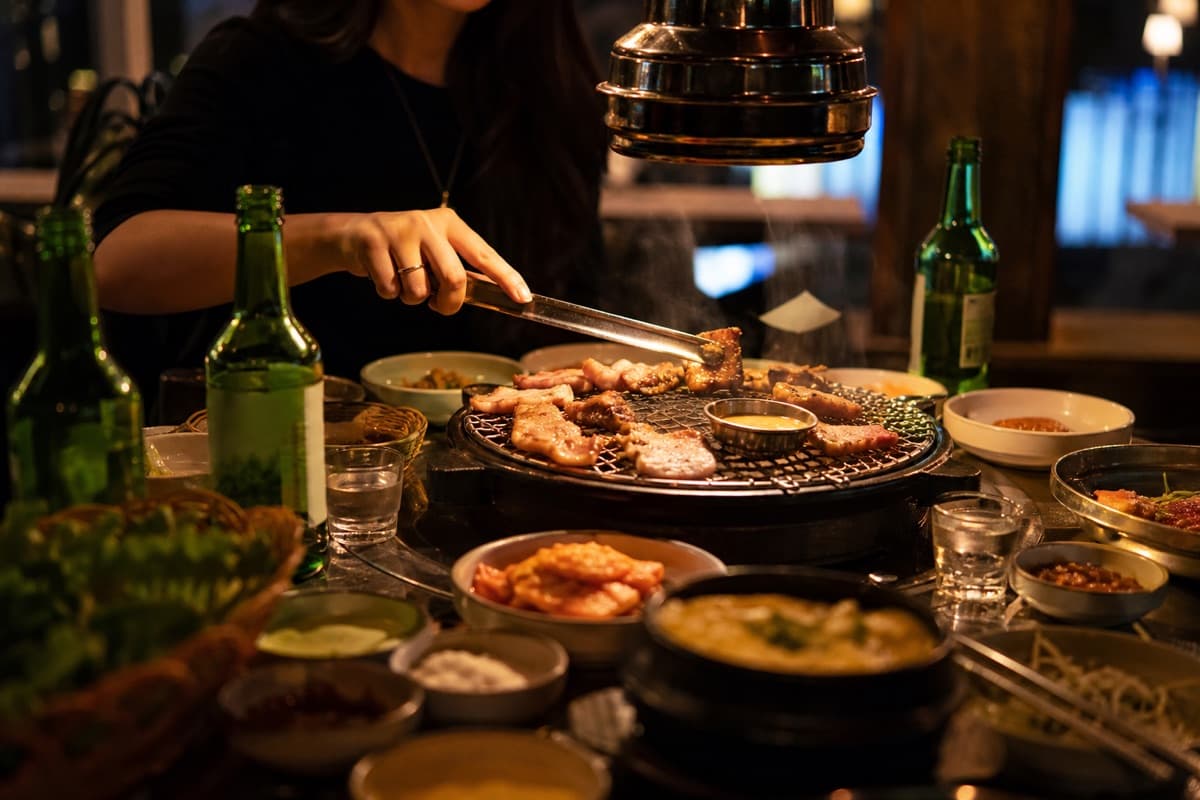
- Chamisul (참이슬) by HiteJinro is the market leader and arguably the most recognizable soju brand globally. Its "Fresh" version at around 16.9% ABV is the standard green bottle you'll see on virtually every Korean restaurant table.
- Chum Churum (처음처럼) by Lotte is the main competitor, known for being slightly softer and smoother. The name translates to "like the first time," which captures the brand's marketing angle.
Regional soju brands also carry fierce local loyalty. Andong Soju from Gyeongsang Province is traditionally distilled at a higher proof, and Hallasan is the soju of choice on Jeju Island.
The Flavored Soju Boom
In recent years, flavored soju has exploded in popularity, especially among younger drinkers. Peach, grape, grapefruit, green grape, and yogurt-flavored varieties fill convenience store shelves. These fruit sojus clock in at around 12-13% ABV, making them even more approachable and a major export gateway for international markets.
How to Drink Soju Properly
Soju has its own ritual. The traditional way to drink it:
- Shake the bottle before opening (supposedly to mix the sediment, though modern soju doesn't really have any; it's tradition now).
- Twist off the cap and flick the bottom of the bottle with your finger to break the seal.
- Pour for others first. Never pour your own drink.
- Use two hands when pouring for or receiving from someone older or senior.
- Turn your head away from elders when you take your first sip.
These small gestures carry real social weight. Getting them right shows respect and cultural awareness.
Maekju: Korean Beer Culture
Maekju (맥주) simply means beer, and Korea's beer scene has gone through a dramatic transformation.
The Legacy Brands
For decades, two brands dominated: Cass and Hite. Both are light, crisp lagers that pair well with Korean food but rarely excite craft beer enthusiasts. Cass leans slightly hoppier while Hite is smoother. Most Koreans have a preference, and opinions can get surprisingly strong.
Kloud and Terra are newer entries from the major breweries, positioned as slightly more premium alternatives. Terra, with its distinctive green bottle, marketed itself around using "Australian malt" and gained a solid following.
The Craft Beer Revolution
Korea's craft beer scene has grown enormously since regulations were loosened around 2014, allowing smaller breweries to sell directly. Neighborhoods like Itaewon and Yeonnam-dong in Seoul became hotbeds for craft breweries.
Popular breweries like The Booth, Magpie Brewing, and Amazing Brewing Company offer everything from IPAs and stouts to Korean-inspired brews using ingredients like yuzu and makgeolli yeast.
Makgeolli: The Traditional Rice Wine
Makgeolli (막걸리) is Korea's oldest alcoholic beverage, a milky, slightly fizzy rice wine with a sweet-tart flavor. It's typically around 6-8% ABV and traditionally served in a bowl or kettle.
Once considered a farmer's drink, makgeolli has experienced a revival. Premium versions using organic rice and natural fermentation now compete alongside wine and craft beer.
Makgeolli pairs beautifully with pajeon (파전), Korean savory pancakes, especially on rainy days. Koreans have a strong cultural association between rain and makgeolli, and pajeon restaurants see genuine spikes in business whenever it rains.
Somaek: The Perfect Bomb
Somaek (소맥) is the beloved Korean cocktail of soju mixed with beer. The name is simply a combination of "soju" and "maekju." The standard ratio is roughly 3 parts beer to 1 part soju, though everyone has their preferred ratio.
The dramatic way to make somaek involves dropping a shot glass of soju directly into a glass of beer, bomb-style. Some people stir it gently, others chug it after the drop. Either way, somaek hits harder than you'd expect, and it's the fuel behind many legendary Korean nights out.
Drinking Etiquette: The Unwritten Rules
Korean drinking etiquette is rooted in Confucian values of respect for elders and social harmony. Here are the essential rules:
- Never pour your own drink. Wait for someone else to pour for you. If your glass is empty, someone at the table should notice and fill it. Return the favor.
- Two-handed pouring and receiving. When drinking with someone older or more senior, hold the bottle with both hands when pouring, and hold your glass with both hands (or support your pouring arm with your other hand) when receiving.
- Turn away from elders. When taking a drink in the presence of someone senior, turn your body and head slightly away as a sign of respect.
- Don't refuse the first drink. Declining the first glass offered to you is considered rude. After the first round, you have more flexibility.
- Keep an eye on others' glasses. An empty glass at a Korean table is a social cue. Keeping others' glasses full is a sign of attentiveness and care.
Hoesik: The Company Dinner
Hoesik (회식) is the Korean tradition of company dinners where coworkers eat and drink together after work. Historically, these were practically mandatory. Refusing to attend could hurt your career prospects.
A typical hoesik follows a multi-round structure called "cha" (차):
- 1차 (il-cha): Dinner with soju and beer at a Korean BBQ or similar restaurant
- 2차 (i-cha): Move to a bar or noraebang (karaoke room) for more drinking
- 3차 (sam-cha): Late-night food run, often to a pojangmacha (tent bar) or ramen spot
Hoesik culture is evolving, though. Younger workers increasingly push back against obligatory drinking, and many companies have introduced policies limiting hoesik frequency and pressure. The pandemic accelerated this shift.
Anju: You Don't Drink Without Food
In Korea, drinking without food is almost unthinkable. Anju (안주) refers to food eaten while drinking, and it's considered essential.
The most iconic anju combination is chimaek (치맥): fried chicken and beer. It's practically a national institution, especially when watching sports. Other popular anju include:
- Dried squid (ojingeochae) with peanuts
- Dubu kimchi (tofu with stir-fried kimchi and pork)
- Golbaengi-muchim (spicy sea snails)
- Fruit platters (especially at noraebang)
- Jokbal (braised pig's feet)
Drinking Games: Turning Soju Into Sport
Korean drinking games are legendary and can turn any gathering chaotic in minutes:
Flick the Cap (병뚜껑 치기): After opening a soju bottle, the dangling seal strip is twisted tightly. Everyone takes turns flicking it until someone breaks it off. That person picks who drinks.
Titanic (타이타닉): Float a shot glass in a beer glass. Players take turns pouring soju into the floating glass. Whoever sinks the "ship" drinks the whole thing.
Image Game (이미지 게임): Someone asks "who at this table would most likely..." and everyone points at who they think fits. Whoever gets the most votes drinks.
Baskin Robbins 31: Players count up from 1, saying one to three numbers at a time. Whoever is forced to say 31 drinks.
Haejangguk: The Morning After
Korean hangover culture is its own category. The most traditional remedy is haejangguk (해장국), literally "hangover soup." It's a hot, hearty soup typically made with bean sprouts, napa cabbage, or dried pollack in a rich broth.
Convenience stores sell an entire section of hangover drinks, with Dawn 808 and Condition being the most popular. These small bottles are consumed before or after drinking and contain a mix of oriental raisin tree extract and other herbal ingredients.
A Culture in Transition
Korean drinking culture is visibly changing. Younger Koreans are drinking less overall. The rise of "sober curious" culture, growing health consciousness, and rejection of forced drinking at work events are all contributing factors.
Low-alcohol and zero-alcohol options are expanding. The stigma around not drinking is weakening, particularly in professional settings.
Solo drinking (혼술, honsul) has also become normalized. Where drinking was once strictly a group activity, many Koreans now enjoy a quiet beer or glass of wine alone, reflecting broader changes in how Koreans think about independence and social obligation.
The core of Korean drinking culture, the warmth, the bonding, the rituals of care expressed through pouring for each other, remains strong. What's changing is the pressure. And most Koreans, young and old, would agree that's a good thing.