Why Every Korean Lives in an Apartment: Housing Culture Explained
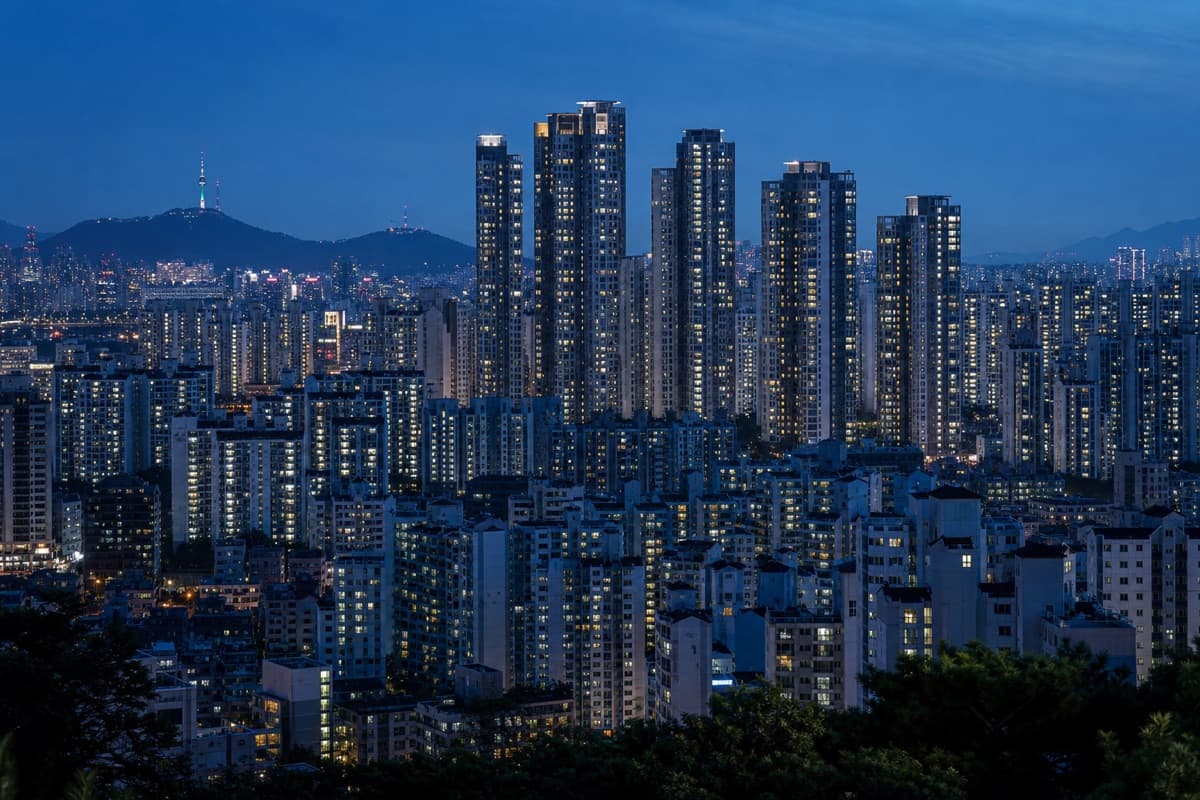
If you fly into Seoul and look out the window as the plane descends, the view is unmistakable: clusters of identical high-rise apartment towers stretching in every direction. South Korea is one of the most apartment-dense countries on the planet, and the reasons behind this go far beyond simple urban planning.
For Koreans, apartments aren't just places to live. They are investment vehicles, status symbols, family milestones, and a source of constant national conversation. Understanding Korean apartment culture is understanding a fundamental piece of what makes Korean society tick.
How Apartments Took Over Korea
Korea wasn't always a nation of apartment dwellers. The transformation happened remarkably fast.
In the 1960s, most Koreans lived in traditional single-story houses (hanok) or modest low-rise dwellings. The country was still recovering from the Korean War, and the population was largely rural. Then came the economic miracle.
During the 1970s and 80s, South Korea industrialized at a pace that few nations have ever matched. Millions of people migrated from the countryside to cities, especially Seoul. The government needed to house them quickly, and the solution was massive apartment complex construction. State-backed developers built enormous danji (단지, apartment complexes) that could house thousands of families in organized, efficient blocks.
These weren't luxury residences. Early Korean apartments were functional and plain. But they offered something revolutionary for many families: modern plumbing, central heating, and a level of convenience that traditional housing couldn't match.
By the 1990s, apartments had become the dominant form of housing in Korean cities. Today, roughly 60% of South Korean households live in apartments. In Seoul, that number is even higher. The standalone house, common in many Western suburbs, is relatively rare in Korean urban life.
The Jeonse System: Korea's Unique Rental Model
Perhaps nothing about Korean housing confuses foreigners more than jeonse (전세).
In most countries, renting means paying monthly rent. Korea has that option too (called wolse, 월세), but the traditional Korean system works completely differently.
Under jeonse, the tenant pays a massive lump-sum deposit to the landlord, typically 50-80% of the property's market value. The tenant then lives in the property for the contract period (usually two years) without paying any monthly rent. When the contract ends, the landlord returns the full deposit.
How does the landlord profit? They invest the deposit money and keep the returns. When interest rates were high, this was extremely profitable for landlords and a great deal for tenants who had access to capital.
An example: An apartment worth 500 million won (~$375,000 USD) might have a jeonse deposit of 350 million won. The tenant pays this upfront, lives rent-free for two years, and gets every won back at the end.
Where does the deposit money come from? Often, a combination of:
- Savings from both spouses
- Gifts or loans from parents (extremely common and socially accepted)
- Bank loans specifically designed for jeonse deposits
The jeonse system has come under strain in recent years. Lower interest rates reduced landlord profits, pushing many to switch to monthly rent models. And rising property prices have pushed jeonse deposits so high that the system's affordability advantage has eroded. Still, jeonse remains a distinctly Korean institution that shapes how people think about housing, wealth, and life planning.
When a Korean couple gets married, one of the first and most stressful conversations is about the jeonse deposit. Securing housing is considered a prerequisite for married life, and families often pool resources across generations to make it happen.
Apartment Brand Culture
In Korea, not all apartments are equal, and the builder's name matters enormously.
Major construction companies brand their apartment lines like luxury products:
- Hyundai — Hillstate
- Samsung — Raemian
- Lotte — Castle
- GS — Xi (pronounced "ja-ee")
- Daewoo — Prugio
- POSCO — The Sharp
Living in a "branded" apartment from one of these major builders signals economic status. The brand affects not just prestige but actual property value. A Samsung Raemian apartment in a desirable neighborhood will command significantly higher prices than a no-name building of similar size and age nearby.
Apartment advertisements in Korea look more like luxury car commercials than real estate listings. They emphasize lifestyle, sophistication, and social advancement. The message is clear: where you live defines who you are.
This brand consciousness extends to the complex name itself. Many complexes have elaborate names mixing Korean and English or French words, designed to sound upscale. Walking through a Korean city, you'll see names like "Lotte Castle Gold," "Raemian Firstige," or "Xi the Palace" displayed on building facades.
Moving Day Culture
Moving (이사, isa) in Korea has its own set of customs that visitors find fascinating.
First, there's the moving truck ballet. Korean moving companies are extraordinarily efficient. Using special exterior elevators (called sadari-cha, 사다리차, literally "ladder trucks") that lift furniture directly through windows, they can move an entire apartment's contents in just a few hours. You'll often see these telescoping platforms extended up the side of apartment buildings, with workers feeding couches and refrigerators through upper-floor windows.
After moving in, a common tradition is to eat jjajangmyeon (짜장면, black bean noodles). The logic is practical: the kitchen isn't set up yet, and jjajangmyeon is cheap, delivered fast, and filling. It has become such a strong cultural association that moving day and jjajangmyeon are almost synonymous.
There's also a tradition of giving neighbors a housewarming gift, though this custom is fading in modern high-rise complexes where residents rarely interact with neighbors.
Ondol: The Heated Floor
One feature of Korean apartments that visitors either love or find bizarre is ondol (온돌), the floor heating system.
Traditional ondol used heated stones with smoke channels running beneath the floor. Modern apartments use hot water pipes embedded in the floor, but the principle is the same: heat comes from below.
This means several things for daily life:
- Koreans sit, eat, and sleep on the floor. This isn't a matter of lacking furniture. Floor-sitting culture is deeply tied to ondol. When the floor itself is warm, sitting on it is genuinely comfortable.
- Shoes never enter the home. The floor is living space, and keeping it clean is essential. Every Korean apartment has a small entryway (hyungwan, 현관) where shoes come off before stepping up into the living area.
- Blankets on heated floors are a common sleeping arrangement, especially for children or when hosting guests. Many Koreans prefer sleeping on a thin mattress on the heated floor over a Western-style bed.
Foreign visitors sleeping on a Korean floor for the first time often describe it as surprisingly comfortable, especially in winter when the floor radiates gentle warmth all night.
The Dong-Ho System
Korean apartment addresses follow the dong-ho (동-호) system, which can confuse newcomers.
A typical address might read: "래미안 아파트 103동 1502호" (Raemian Apartment, Building 103, Unit 1502).
- 동 (dong) — Building number within the complex. Large complexes can have 20+ buildings.
- 호 (ho) — Unit number. The first two digits usually indicate the floor (15th floor), and the last two indicate the unit position on that floor (unit 02).
This system means a single apartment complex is essentially a small neighborhood. The largest complexes in Korea house 10,000+ residents with their own infrastructure.
Apartment Complex Amenities
A Korean apartment complex is not just a collection of buildings. It's a self-contained community with amenities that rival many small towns:
- Playgrounds — Multiple playgrounds with exercise equipment for seniors
- Underground parking — Expansive garages, often with direct elevator access to each building
- Security guards — 24-hour gatehouse security with CCTV coverage
- Community centers — Often including fitness rooms, reading rooms, and meeting spaces
- Recycling stations — Elaborate sorting areas for Korea's strict recycling requirements
- Walking paths — Landscaped gardens and walking trails between buildings
- Commercial zones — Some large complexes include convenience stores, dry cleaners, and small restaurants on the ground floor
The complex management office handles maintenance, security, and community disputes. Monthly management fees (gwanlibi, 관리비) cover these shared services and can range from 200,000 to 500,000+ won depending on the complex and unit size.
Officetel and One-Room Culture
Not everyone lives in a family-sized apartment. Korea's housing landscape includes options for singles and young professionals:
Officetels (오피스텔) are hybrid buildings combining office and residential units. Individual units are small (typically 20-40 square meters) but self-contained with a tiny kitchen, bathroom, and sleeping/living area. They're popular with young professionals who want to live alone in central locations without the massive deposit required for a full apartment.
One-rooms (원룸) are even smaller studio units, often in walk-up buildings. These are the standard housing for college students and entry-level workers. A typical one-room is around 15-25 square meters with a combined living/sleeping area, a small kitchen counter, and a bathroom. They're affordable but cramped, and the lack of space drives many young Koreans to spend their free time in cafes, PC bangs, and other public spaces.
Gosiwon (고시원) sit at the bottom of the housing ladder. Originally built as study rooms for people preparing for civil service exams, they've become ultra-budget housing. Rooms can be as small as 3-5 square meters, sometimes without windows. They serve a necessary function but represent one of the harsher realities of Korea's housing market.
How Apartment Prices Shape Society
It's impossible to separate Korean apartment culture from the broader topic of wealth inequality and social anxiety.
Seoul apartment prices have risen dramatically over the past two decades, far outpacing wage growth. Owning an apartment in a desirable Seoul neighborhood like Gangnam, Seocho, or Yongsan has become a defining marker of economic success. For many young Koreans, the dream of homeownership feels increasingly distant.
This dynamic drives several social behaviors:
- Delayed marriage — Many couples wait to marry until they can secure housing, contributing to Korea's declining marriage and birth rates.
- Family financial interdependence — Parents helping children with housing deposits is expected, creating financial entanglement across generations.
- Real estate as dinner-table conversation — Apartment prices, new developments, and neighborhood valuations are standard social topics. Knowing local property values is considered basic adult literacy.
- Intense neighborhood competition — School districts, proximity to subway stations, and complex reputation all feed into property values, creating fierce competition among parents for apartments in top school zones.
The Korean expression "영끌" (yeongkkeul, short for "영혼까지 끌어모으다," meaning "gathering everything up to your soul") describes people who leverage every possible source of funds to buy an apartment. It captures the desperation and determination that housing inspires in Korean society.
More Than Just Housing
Korean apartments represent something much larger than bricks and concrete. They embody the rapid modernization of a country that transformed itself in a single generation, the social contracts between families and communities, and the aspirations of a society where your address genuinely shapes your identity and opportunities.
For visitors, understanding apartment culture explains many things that initially seem puzzling about Korean life: why people stay in cafes for hours (their apartments are small), why parents sacrifice so much for their children's education (school districts tied to apartments), and why real estate dominates conversations in ways that might seem excessive from the outside.
The apartment isn't just where Koreans live. It's woven into the fabric of how Korean society organizes itself.