Why Koreans Are 'Older' Than You Think: The Korean Age System
Here's a fact that surprises almost every foreigner learning about Korea for the first time: until June 2023, Koreans were officially one to two years older than people born on the same day in most other countries. A baby born on December 31st would be one year old at birth and then turn two the very next day, on January 1st. That baby would be "two years old" while being, by international standards, one day old.
This wasn't a mistake or an outdated rural tradition. It was the standard, legally recognized way that Korea counted age for decades. And while the system was officially reformed in 2023, its cultural effects are still very much alive.
The Three Age Systems
Before 2023, Korea operated with three separate age-counting systems, all used in different contexts. Yes, three.
1. Korean Age (한국 나이)
This was the system used in everyday conversation. Two rules defined it:
- You are 1 year old at birth. The time spent in the womb counts as your first year.
- Everyone gains one year on January 1st. Your actual birthday is irrelevant for age calculation purposes.
So if you were born in March 1995, on January 1st, 2025, you would have been 31 in Korean age, even though you hadn't turned 30 yet by international counting.
The formula was simple: Korean age = Current year - Birth year + 1
2. Year Age (연 나이, Yeon Nai)
This system was used primarily in legal contexts like military service eligibility and school enrollment. It was similar to Korean age but without the "+1 at birth" part.
Year age = Current year - Birth year
Under this system, everyone born in the same calendar year was the same age, regardless of their actual birthday. This meant a person born in January and a person born in December of the same year were always the same year age throughout the calendar year.
3. International Age (만 나이, Man Nai)
This is the system used in most of the world. You're 0 at birth and gain a year on each birthday. Korea used this for certain legal and medical purposes even before the 2023 reform, but it wasn't what people used in daily life.
The Confusion Was Real
Imagine going to a doctor who uses international age, then talking to a friend who uses Korean age, then checking your eligibility for military service which uses year age. The same person could legitimately be three different ages on the same day depending on who was asking and why. This wasn't a hypothetical problem; it caused genuine administrative confusion, particularly in medical settings where age-based dosages and screenings needed precision.
The 2023 Reform
On June 28, 2023, South Korea officially standardized on international age (만 나이) for all legal and administrative purposes. The change had been discussed for years, and multiple lawmakers had proposed it before it finally passed.
The practical effects were immediate:
- Legal documents now use international age exclusively
- Medical records standardized to international age
- Government communications switched to international age
But here's the thing: you can't legislate a cultural habit out of existence overnight. In daily conversation, many Koreans still use Korean age. When someone asks "몇 살이에요?" (myeot sarieyo?, "How old are you?"), the answer might still come in Korean age, especially among older generations. The reform changed the official system, but the cultural reflex takes longer to rewire.
Why Korean Age Existed in the First Place
Several theories explain the origin of counting from one at birth:
The womb counts. In traditional East Asian thinking, life begins at conception, not birth. The nine months of pregnancy are counted as the first year. This view isn't unique to Korea. China and other East Asian cultures historically used similar systems, though most abandoned them earlier.
Communal aging. Everyone aging together on January 1st reinforced a sense of collective identity. Your specific birthday was less important than what year you were born in, which determined your cohort in school, military service, and social hierarchy.
Practical simplicity. In pre-modern Korea, keeping track of exact birth dates for an entire population wasn't always feasible. Counting by calendar year was administratively simpler.
How Age Shapes Daily Life in Korea
Even after the 2023 reform, age remains one of the most socially significant pieces of information in Korean culture. It determines how you speak, how you're spoken to, and where you fit in virtually every social interaction.
Language Changes Based on Age
Korean has multiple speech levels, and the one you use depends heavily on the relative age of the person you're talking to. Meeting someone new in Korea often starts with figuring out who's older:
- 존댓말 (jondaenmal): Formal/polite speech, used with people older than you, strangers, or in professional settings.
- 반말 (banmal): Casual speech, used with people younger than you or close friends of the same age.
Using banmal with someone older than you when you haven't been given explicit permission is a significant social misstep. Conversely, being told "말 놓으세요" (mal noheuseyo, "feel free to speak casually") is a genuine gesture of closeness.
The Birth Year Question
When Koreans meet someone new in a social setting, one of the first questions is often "몇 년생이에요?" (myeot nyeonsaengieyo?, "What year were you born?"). This isn't considered nosy or rude. It's practical information that determines the dynamic of the relationship.
Being born in the same year creates an instant bond. You're 동갑 (donggap, same age), which means you can speak casually to each other right away. Being even one year apart establishes a clear hierarchy: the older person is 형/오빠/언니/누나 (hyeong/oppa/eonni/nuna, older brother/sister terms), and the younger person is 동생 (dongsaeng, younger sibling).
The 빠른 생일 (Ppareun Saengil) Complication
This is where it gets interesting. "빠른 생일" (fast birthday) refers to people born in January or February. Under Korea's school system, the academic year traditionally ran from March to February. A child born in January 1995 and a child born in December 1994 would be in the same school class, even though they were born in different calendar years.
This created a social gray zone. The January-born person is technically a year younger by birth year, but they went through school with the older cohort. So are they "같은 나이" (same age) with their classmates or not? The answer depends on who you ask, and it's been a source of friendly debates (and occasional genuine confusion) for generations.
People with fast birthdays often introduce themselves with the clarification: "95년생인데 빠른이에요" (I'm born in '95 but I'm a fast birthday), which signals that they socially belong to the '94 cohort.
Age and Major Life Milestones
Military Service
All Korean men are required to serve in the military, typically between ages 18 and 28 (international age). The timing of when you enlist affects your education and career timeline significantly. Many male university students take a leave of absence to complete their service, returning to campus two years older than when they left. This creates a visible age gap in university classrooms between students who have served and those who haven't.
School Year and Age Cutoffs
Korean school enrollment is based on birth year. All children born in the same calendar year enter elementary school together. This means that within a single classroom, the age difference between the oldest student (born in January) and the youngest (born in December) is nearly a full year, which is significant in early childhood development.
Drinking and Smoking
The legal age for purchasing alcohol and tobacco in Korea is 19 in international age. Before the 2023 reform, this was often a source of confusion since different age systems could give different answers about whether someone was legally old enough.
Age-Related Celebrations
Koreans mark certain age milestones with special celebrations:
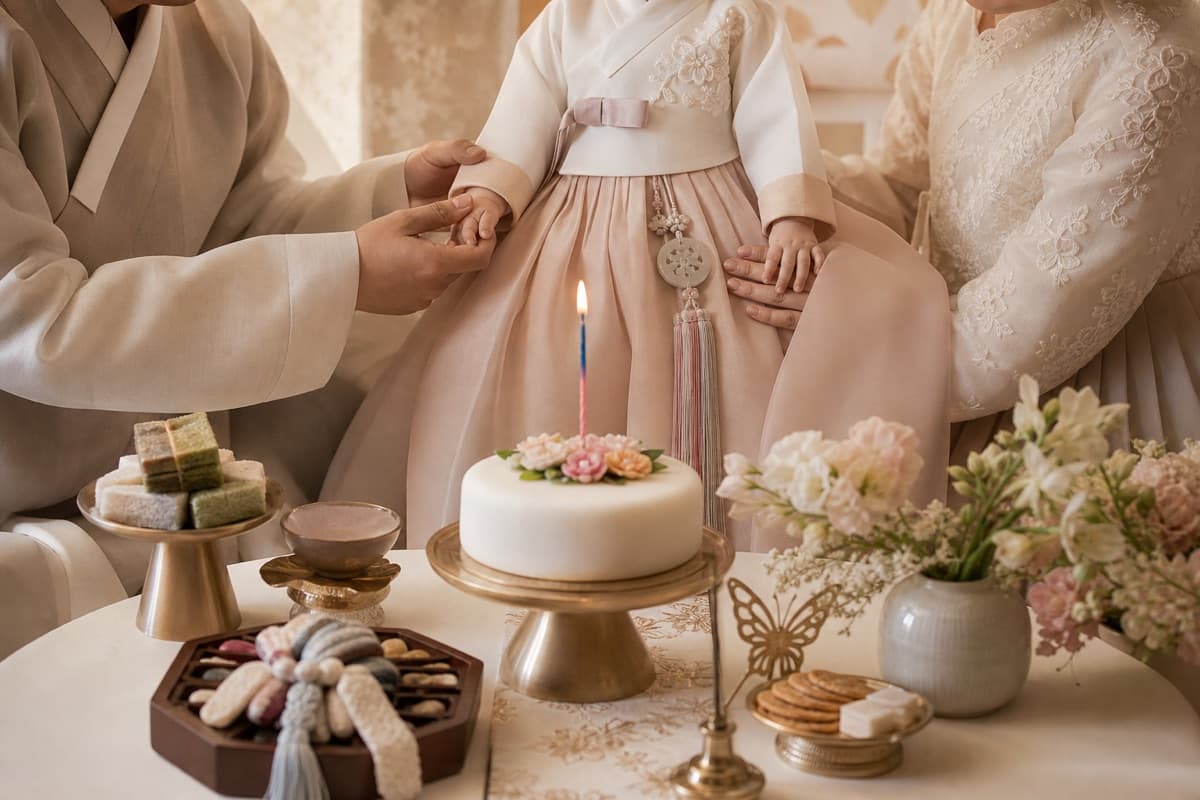
- 돌잔치 (Doljjanchi): A child's first birthday is a major celebration. The 돌잡이 (doljabi) ceremony involves placing objects (thread, money, a pencil, a stethoscope) in front of the child to see which one they grab first, supposedly predicting their future.
- 환갑 (Hwangap): The 60th birthday, marking the completion of the traditional 60-year zodiac cycle. While it was historically a major milestone (reaching 60 was less common in earlier eras), modern longevity has shifted the big celebration to 칠순 (chilsun), the 70th birthday, or even 팔순 (palsun), the 80th.
Age in Pop Culture
K-pop and Korean entertainment have introduced the concept of Korean age hierarchy to international fans. Within K-pop groups, the oldest member is the 맏형/맏언니 (mat-hyeong/mat-eonni, eldest brother/sister), and age order often determines things like room assignments, speaking order in interviews, and informal group dynamics.
Fans learn quickly that Korean idols born in the same year call each other "친구" (chingu, friend) while those born in different years use the appropriate honorific titles. This system of age-based respect within idol groups reflects exactly how Korean society operates at large.
The Cultural Weight Remains
The 2023 reform standardized the numbers, but it didn't change the underlying cultural reality: age in Korea is not just a number. It's a social coordinate that tells people how to interact with you. Knowing whether someone is your senior by even a single year changes the vocabulary you use, the way you pour drinks, whether you initiate conversation, and how you address them.
For foreigners in Korea, the advice is straightforward. Don't worry about calculating your Korean age anymore since the official system has changed. But do pay attention to age dynamics in social situations. When a Korean person asks your birth year, give them an answer. When someone older offers you a drink, receive it with both hands. When someone younger uses polite speech with you, that's not distance; that's respect.
Age in Korea isn't about the number itself. It's about the relationships that number defines.