Every K-Pop Lightstick Explained: The Ultimate Visual Guide
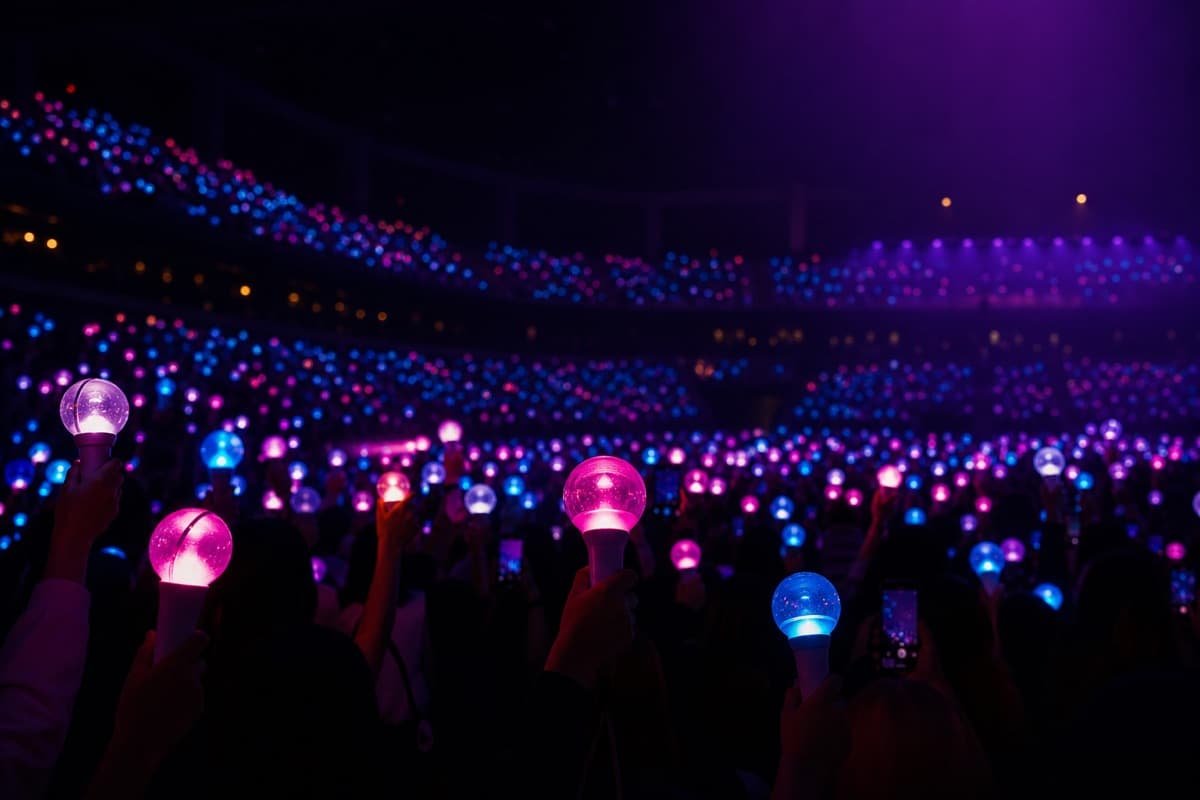
Walk into any K-Pop concert, and the first thing that hits you isn't the music. It's the light. Thousands of fans holding glowing, custom-designed devices that pulse and change color in perfect sync with the performance on stage. These aren't generic glow sticks from a convenience store. They're lightsticks (응원봉, eungwonbong), and they've become one of the most distinctive elements of K-Pop fan culture.
Each fandom has its own lightstick with a unique design, a specific name, and often multiple versions that fans collect like prized possessions. They're part concert tool, part identity badge, part collectible item. And the technology inside them has gotten surprisingly sophisticated.
From Plastic Tubes to Bluetooth: A Brief History
The Glow Stick Era
In the early days of K-Pop concerts during the 1990s and early 2000s, fans used simple chemical glow sticks or colored balloons. Each fandom adopted an unofficial color (called a fandom color), and fans would bring items in that color to concerts. TVXQ fans brought red balloons. Super Junior fans waved blue. It was simple, effective, and created beautiful oceans of color in concert venues.
The problem was consistency. Chemical glow sticks faded after a few hours. Colors varied between manufacturers. And there was no way for artists to interact with the audience's lights during a show.
The First Official Lightstick
BIGBANG is widely credited with popularizing the modern K-Pop lightstick concept. Their "BANG BANG BANG" crown-shaped lightstick, released in 2006, was one of the first official, reusable concert lights sold by an entertainment company. It was battery-powered, consistent in color, and distinctly recognizable.
This set off a chain reaction. Once one major group had a custom lightstick, every other group needed one too. Entertainment companies realized that lightsticks weren't just concert accessories. They were merchandise, branding tools, and symbols of fandom loyalty all wrapped into one glowing package.
Iconic Lightstick Designs
ARMY Bomb (BTS)
The ARMY Bomb is arguably the most famous lightstick in K-Pop history. Shaped like a simple sphere (or "bomb") on a handle, it has gone through multiple versions. The first version was a basic light-up globe. Version 3 introduced Bluetooth connectivity, allowing it to sync with the concert's lighting system. The Special Edition and Map of the Soul version added app connectivity and improved color range.
At a BTS concert, seeing 60,000 ARMY Bombs changing color in unison during "Mikrokosmos" is genuinely breathtaking. The device connects to the Weverse app, where fans can control settings and receive concert mode updates.
Price range: Official ARMY Bombs retail for $40-60 USD, though limited editions and older versions can fetch significantly more on the resale market.
Bong Bong (BLACKPINK)
BLACKPINK's lightstick is affectionately called the Bong Bong (봉봉), and its design is anything but subtle. Shaped like a pink hammer, it stands out in any crowd. The hammered shape is distinctive and playful, perfectly matching BLACKPINK's blend of fierce and fun.
Version 2 added Bluetooth functionality, and the limited edition releases have made it a hot collector's item. The hammer design means it's also one of the few lightsticks that can stand upright on a shelf for display, which fans appreciate.
Candy Bong (TWICE)
TWICE's Candy Bong is shaped like a lollipop with a round candy-colored globe, reflecting the group's signature sweet and cheerful concept. The Candy Bong Z (version 2) introduced app connectivity and multi-color support, and it became one of the bestselling lightsticks in K-Pop.
The design is immediately recognizable and perfectly aligned with TWICE's brand. When an arena full of Candy Bongs lights up in the group's signature apricot color, the effect is stunning.
Lightstick (ATEEZ)
ATEEZ's lightstick goes full pirate-ship aesthetic, fitting their group's lore about being "treasure-hunting pirates." The design features an hourglass shape, and the version 2 introduced a crescent-moon element. It connects via Bluetooth and supports concert sync.
ATEEZ fans (called ATINY) are known for being particularly passionate about their lightstick, and concert footage regularly shows incredibly coordinated light displays.
Ocean Bong (Stray Kids)
Stray Kids' Nachimbong (나침봉, literally "compass stick"), often called Ocean Bong by international fans, features a compass design that reflects the group's "finding your own way" concept. It's one of the more intricate lightstick designs, with a detailed compass rose housing the light.
The Bluetooth-connected version syncs with concerts and has a companion app. Stray Kids fans (STAYs) have created some memorable concert moments with coordinated light displays during emotional songs like "Levanter."
Caratbong (SEVENTEEN)
SEVENTEEN's Caratbong gets its name from the fandom name "Carat." Shaped like a diamond (carat, get it?), it refracts light beautifully when illuminated. The version 2 introduced multi-color LED support and Bluetooth connectivity.
What makes SEVENTEEN concerts unique is that the group has 13 members, and Caratbongs can display each member's assigned color, making "bias" (favorite member) identification easy during fan events.
Other Notable Designs
- Lightstick (EXO): Originally shaped like a pharaoh's staff, matching their debut concept. Later versions simplified the design but kept the distinctive silver-and-white palette.
- Bbyongbong (Red Velvet): A sleek, wand-like design in the fandom's signature light stick pink.
- Moobong (Stray Kids' alternate name): Some fans use this playful alternative name.
- Fanlight (ITZY): Features a ring design that reflects the group's "in the morning" and self-confidence concepts.
How Bluetooth Concert Sync Works
Modern K-Pop lightsticks are legitimate pieces of technology. Here's what's happening inside:
- Bluetooth Low Energy (BLE): Each lightstick contains a BLE chip that connects to a central system in the concert venue.
- Zone mapping: The venue is divided into sections, and each lightstick's position is registered (usually through seat assignment or app check-in).
- Color commands: The central system sends real-time color and brightness commands to every connected lightstick simultaneously.
- Music sync: The lighting design is choreographed to match the setlist, with color changes synchronized to specific beats, drops, and emotional moments.
The result is that an entire stadium becomes a controllable LED display. During BTS's "Mikrokosmos," ARMY Bombs turn into a slow-moving galaxy. During SEVENTEEN performances, Caratbongs create waves of color flowing through the audience. It's concert production that extends beyond the stage and into the crowd.
Collecting Culture
For many K-Pop fans, lightsticks aren't just for concerts. They're collectibles. Here's what drives the collecting culture:
Version Upgrades
Most groups release updated lightstick versions every few years. Fans who already own version 1 will often buy version 2, keeping the original as a collectible. Some fandoms are on their third or fourth version.
Limited Editions
Special editions released for specific tours, anniversaries, or events can become highly sought after. A limited-edition ARMY Bomb from BTS's Wembley Stadium concert, for example, commands premium prices on resale markets.
Display and Decoration
Fans display lightsticks on shelves alongside albums, photocards, and other merchandise. Custom stands, display cases, and even LED bases (for lightsticks that can stand upright) have become their own micro-market.
Pricing
- Standard official lightsticks: $30-50 USD
- Premium/special editions: $50-80 USD
- Resale for discontinued models: Can exceed $100-200 USD depending on rarity
- Unofficial replicas: $15-25 USD (not recommended due to poor Bluetooth compatibility and build quality)
How to Buy
Official sources are always the safest bet:
- Group/company official stores (Weverse Shop, YG Select, JYP Shop, SM Global Shop)
- Concert venue merchandise booths (often have exclusive versions)
- Authorized K-Pop retailers (Ktown4u, Makestar, etc.)
Resale platforms like eBay, Mercari Japan, and specialized K-Pop trading communities on social media can be sources for discontinued versions, but buyers should watch out for counterfeits. Unofficial lightsticks are common and generally lack proper Bluetooth functionality.
Concert Etiquette
Using a lightstick at a concert comes with unwritten rules that most fans follow:
- Use the correct fandom's lightstick. Bringing a different group's lightstick is considered disrespectful (though some fans attend multiple groups' concerts and simply use whichever is appropriate).
- Follow the concert mode. When the Bluetooth sync is active, don't manually override the colors. The coordinated effect only works if everyone participates.
- Don't block views. Hold lightsticks at chest or shoulder height, not above your head (unless everyone else is doing the same).
- Handle with care. Lightsticks can be heavy. Swinging them enthusiastically near someone's head is a real safety concern.
- Batteries matter. Bring spare batteries or charge your lightstick before the show. A dead lightstick in a sea of glowing ones is a sad sight.
Fandom Identity Through Light
What makes lightsticks so significant isn't just the technology or the designs. It's what they represent. In a concert setting, holding up your lightstick is a declaration: I'm here. I'm part of this community. I belong.
K-Pop fandoms are famously passionate, and lightsticks are the physical embodiment of that passion. When an artist on stage looks out at thousands of synchronized lights, they're seeing the collective energy of their fandom made visible. Many idols have spoken about how emotional this sight can be, particularly in the first concerts after the pandemic-era hiatus when fans and artists were reunited.
For international fans who may never get to attend a concert in Seoul, owning a lightstick is still a way to feel connected to the community. Fans display them during livestreams, bring them to viewing parties, and post photos with them as badges of fandom membership.
Test Your Fandom Knowledge
Now that you know the stories behind these iconic lightsticks, how well do you really know the groups that carry them? Try our Guess the K-Pop Boy Group or Guess the K-Pop Girl Group quizzes and find out.