Why Every Korean Man Serves: Military Service Explained
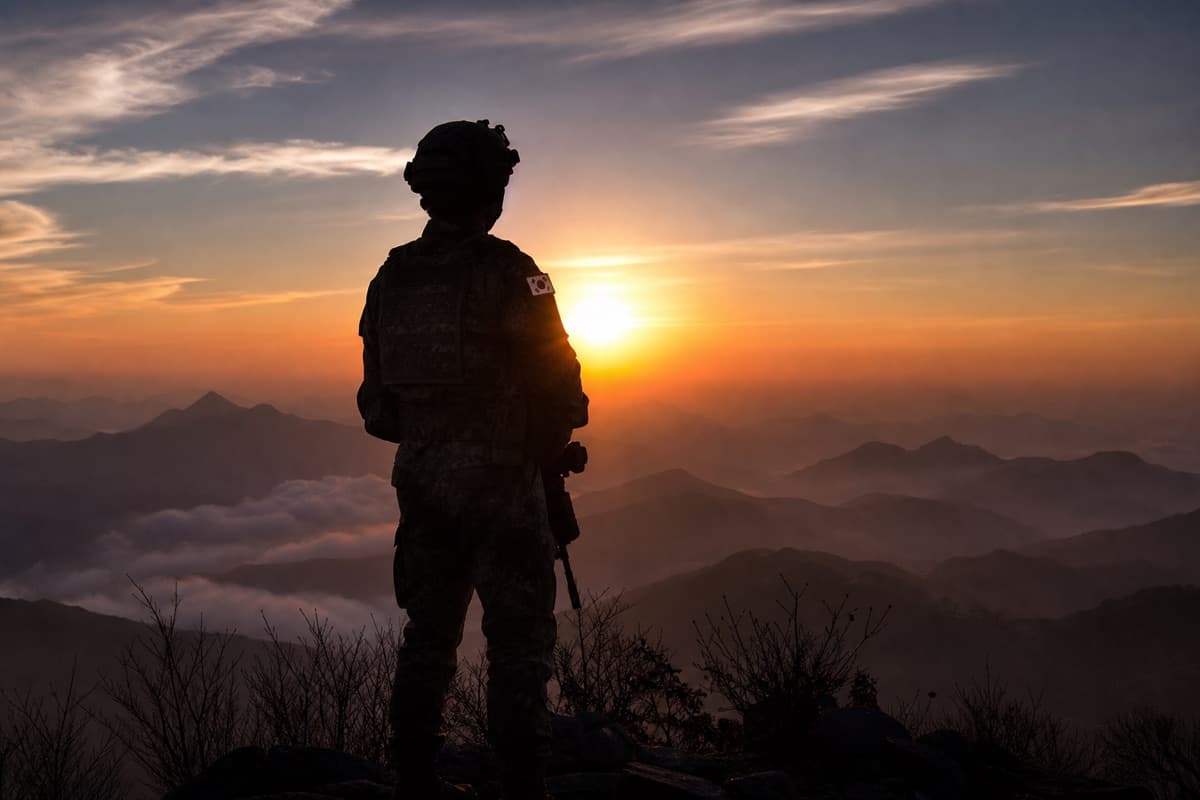
In most countries, military service is a career choice. In South Korea, it's a fact of life. Nearly every able-bodied Korean man is required to serve in the military, and this obligation shapes careers, relationships, education paths, and even pop culture in ways that outsiders often don't fully appreciate.
Understanding Korean military service is essential to understanding Korean society. It's the shared experience that connects generations of Korean men, a constant topic of conversation, and one of the most debated social issues in the country.
Why Mandatory Service Exists
The answer begins with geography and history. South Korea remains technically at war with North Korea. The Korean War (1950-1953) ended with an armistice, not a peace treaty, meaning the two countries are still in a state of suspended conflict. North Korea maintains one of the world's largest standing armies, with an estimated 1.2 million active personnel positioned just north of the demilitarized zone (DMZ).
Given this reality, South Korea maintains a large active-duty military of roughly 500,000 personnel, supplemented by millions of reservists. Conscription is the mechanism that sustains these numbers. The legal basis is Article 39 of the South Korean Constitution, which states that all citizens have the duty of national defense.
The Basics: Who Serves and For How Long
All Korean men are required to complete military service. The obligation applies to any male holding Korean citizenship, including those living abroad (dual citizens must choose by age 18).
Service length depends on the branch:
- Army: 18 months (the most common assignment)
- Navy: 20 months
- Air Force: 21 months
- Marine Corps: 18 months
These durations were reduced from the previous standard of 21-24 months through reforms enacted in the late 2010s. The government has periodically adjusted service lengths based on manpower needs and political pressure.
When Do Men Enlist?
Korean men must enlist between the ages of 18 and 28. Most enlist between 20 and 22, typically after completing one or two years of university. This creates a common pattern: a young man enters university, completes a couple of semesters, takes a leave of absence for military service, and returns to finish his degree afterward.
This interruption means many Korean men graduate from university at 25 or 26, roughly two years later than their female peers or international counterparts. It's a gap that affects career timelines, dating, and life planning in tangible ways.
What Service Looks Like
Basic Training
Every soldier begins with basic training (기초군사훈련), typically lasting five to six weeks. This includes physical conditioning, weapons training, drill, military protocol, and field exercises. The intensity varies somewhat by branch, but the experience is universally described as a shock to the system.
Basic training locations vary, but the Army's major training centers include the recruit training centers in Nonsan (논산) and Cheorwon (철원). The first few weeks involve limited contact with the outside world, adding to the psychological adjustment.
Daily Life on Base
After basic training, soldiers are assigned to their units. Daily life depends heavily on the specific posting. Some soldiers serve at forward bases near the DMZ with heightened security protocols. Others work in administrative, technical, or support roles at bases further south.
A typical day might look like this:
- 06:00 - Wake up, morning roll call
- 06:30 - Breakfast
- 07:30 - Training or duties begin
- 12:00 - Lunch
- 13:00 - Afternoon duties
- 18:00 - Dinner
- 18:30 - Personal time
- 21:00 - Evening roll call
- 22:00 - Lights out
Phone Access and Communication
One of the most significant recent changes is mobile phone access. Until 2019, soldiers had almost no access to personal phones. After policy reforms, enlisted soldiers can now use smartphones during personal time (evenings and weekends), though with restrictions on photography and social media. This change was enormous for morale and has made service more bearable for the current generation.
Leave and Vacation
Soldiers receive around 24-28 vacation days throughout their service for home visits, rest, or personal matters. Special leave may be granted for family emergencies. Soldiers in their final months often receive more flexible scheduling.
Exemptions and Alternatives
Military service exemptions are rare and highly scrutinized. The main categories include:
Medical Exemptions
Men with serious physical or mental health conditions can receive reduced service requirements or full exemptions. Those with moderate conditions might serve in civil service (사회복무요원) instead, working at government offices, public facilities, or social welfare organizations for 21 months. This is often called "공익" (gongik) informally.
Special Exemptions for Achievement
Korean law provides exemptions for men who bring exceptional recognition to the country:
- Olympic medalists (gold, silver, or bronze) and Asian Games gold medalists receive full exemptions
- Classical musicians and dancers who win designated international competitions can qualify
- National merit in arts, sciences, or sports at the highest levels
These exemptions generate significant public discussion. When soccer player Son Heung-min won gold at the 2018 Asian Games with the national team, the military exemption was a major storyline. His Tottenham Hotspur career could have been interrupted without that medal.
The BTS Debate
No exemption discussion was more public than the one surrounding BTS. As members approached the enlistment deadline, a national conversation erupted about whether the group's cultural contributions merited a military exemption. The debate touched on fairness, economic value, cultural diplomacy, and the principle of equal sacrifice.
Ultimately, the Korean government did not create a pop music exemption. BTS members enlisted beginning in late 2022, with the final members completing service by 2025. Even the world's biggest pop act was not exempt.
KATUSA: Serving with Americans
The KATUSA (Korean Augmentation to the United States Army) program assigns Korean soldiers to serve alongside U.S. military units in South Korea. KATUSA positions are highly competitive, selected by lottery among applicants who meet English proficiency requirements. Soldiers use English daily and are generally posted to better-equipped facilities, though they still fulfill the full military obligation.
How Military Service Affects Life
Career Impact
Military service creates a two-year gap in every Korean man's resume. Most employers understand this, but it still affects career trajectories. Some men strategically time their enlistment to minimize disruption, while others use service to develop skills in communications, cyber operations, or mechanical work.
Relationships
The military service period puts significant strain on romantic relationships. The phrase "군백기" (gun-baek-gi), meaning "military breakup period," is well known. Long separations, limited communication (even with smartphone access), and the general stress of service lead to many relationship breakups during this time. Surviving a partner's military service is considered a genuine test of a relationship.
Education
The university leave-of-absence pattern means Korean classrooms have a mix of ages. A 24-year-old junior sitting next to a 20-year-old sophomore is completely normal. This age mixing reinforces the Korean sunbae-hoobae (선배-후배) hierarchy system, where even a one-year age difference creates a senior-junior dynamic.
Women and Military Service
South Korea does not require military service for women. However, women can volunteer for military careers, and the number of female officers and enlisted personnel has grown steadily. Female soldiers serve in most branches and many combat support roles.
The gender disparity in military obligation is a source of ongoing debate. Some Korean men argue that mandatory service constitutes gender-based discrimination, a sentiment that has become more vocal among younger generations.
How Military Culture Shapes Korean Society
The influence of military service extends far beyond the barracks. Several aspects of Korean civilian life trace directly back to military culture:
Hierarchy and respect language. Korea's elaborate system of honorifics and age-based hierarchy is reinforced by military experience, where rank determines everything. The sunbae-hoobae system in workplaces, universities, and social groups mirrors military command structures.
Discipline and group conformity. The emphasis on group cohesion, following procedures, and not standing out too much has roots in military training. This shows up in corporate culture, school life, and social norms.
Shared vocabulary. Military slang permeates everyday Korean language. Terms like "고참" (gocham, senior soldier), "짬" (jjam, seniority/experience), and "빠지다" (ppajida, to shirk duty) are used regularly in civilian contexts.
Bonding through shared suffering. Military service creates a powerful common ground among Korean men. Asking "where did you serve?" is a standard icebreaker, and sharing military stories (especially complaints) is a social bonding ritual. The shared experience creates camaraderie that crosses social and economic boundaries.
Recent Reforms and the Future
The Korean military has undergone significant reforms in recent years:
- Shortened service periods from 24 to 18 months for Army
- Smartphone access during personal time
- Improved barracks conditions and food quality
- Stronger protections against hazing and abuse, following several high-profile incidents
- Better mental health support for soldiers
There is periodic discussion about transitioning to an all-volunteer force, but the security situation on the Korean Peninsula makes this unlikely in the near term.
For Korean men, military service is not just an obligation. It is a rite of passage, a shared sacrifice, and a defining experience that connects them to every generation that came before. Whether they look back on it with pride, frustration, or dark humor (usually all three), it remains one of the most distinctly Korean experiences there is.